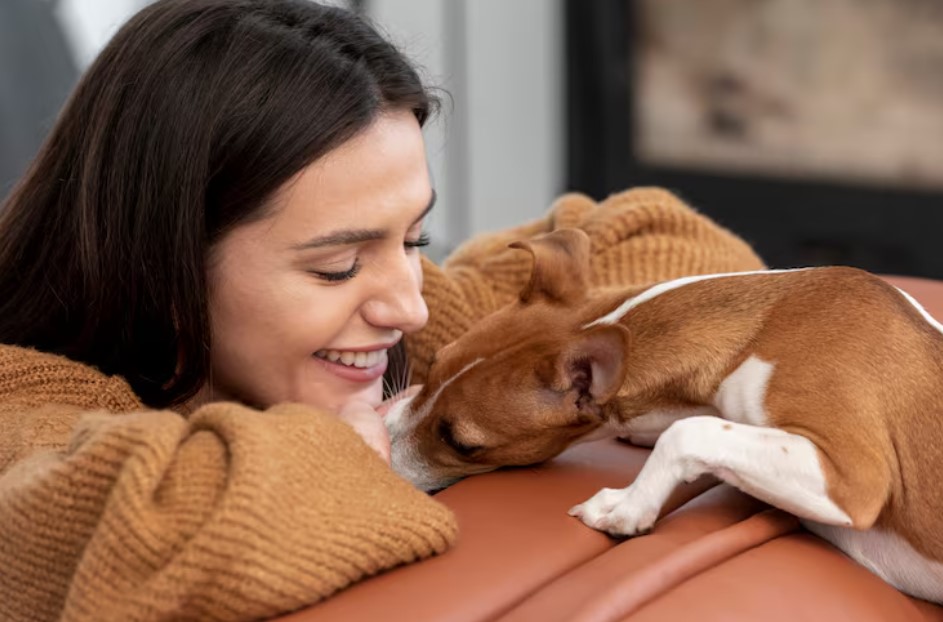
Few things are more adorable than watching a dog tilt its head when someone speaks to it. Whether you are asking your furry companion if they want a walk, mentioning their favourite toy, or making an unusual sound, that curious sideways glance can be irresistible.
Although head tilting is often interpreted as a sign of confusion or curiosity, scientists believe several factors may contribute to this behaviour. From processing familiar words to identifying sounds and observing facial expressions, dogs may tilt their heads for reasons that go beyond simply looking cute.
Understanding this behaviour offers fascinating insights into how dogs communicate, learn, and interact with humans.
1. Dogs May Tilt Their Heads to Process Familiar Words
One interesting explanation for head tilting involves how dogs recognise and process human language.
A 2021 study published in the journal Animal Cognition investigated head-tilting behaviour in dogs trained to recognise the names of different toys. Researchers observed that dogs with an exceptional ability to learn toy names tilted their heads more frequently when hearing familiar toy-related requests.
The findings suggested that head tilting might be associated with processing meaningful auditory information, particularly when dogs recognise words connected to objects or experiences.
However, the study involved a relatively small group of dogs, and researchers did not establish that every head tilt indicates word recognition.
Nevertheless, the research highlights the remarkable ability of some dogs to associate spoken words with specific objects.
2. Head Tilting May Help Dogs Identify Sounds
Dogs have an impressive sense of hearing and can detect sounds across a wider frequency range than humans.
One theory suggests that tilting their heads may help dogs gather information about where a sound originates. Changing the position of the head can alter how sound reaches the ears, potentially providing additional auditory cues.
This may explain why some dogs tilt their heads when hearing unfamiliar noises, high-pitched voices, or unusual sounds.
However, scientists have not conclusively demonstrated that sound localisation is the primary reason dogs tilt their heads. Individual differences in ear shape, hearing ability, and attention may also influence their responses.
3. Dogs May Be Trying to See Our Faces More Clearly
Dogs rely on visual information as well as sound when communicating with people. Human facial expressions, body movements, and gestures can provide valuable clues about what their owners are trying to communicate.
Another proposed explanation is that some dogs tilt their heads to improve their view of a person's face.
Dogs with longer muzzles may experience some obstruction in their lower field of vision when looking directly ahead. Tilting their heads could potentially change their viewing angle and make certain facial features easier to observe.
While this theory is interesting, scientific evidence remains limited. Head tilting has been observed in dogs with different facial structures, suggesting that muzzle length alone cannot explain the behaviour.
4. Head Tilting Can Be a Sign of Attention
Sometimes, a dog's head tilt may simply indicate that something has captured its attention.
Dogs are naturally observant animals that continuously monitor their surroundings. When they hear an unexpected sound or notice an unfamiliar situation, they may stop what they are doing and focus on the source.
Head tilting can occur alongside other attentive behaviours, including raised ears, direct eye contact, and a still body posture.
For example, a dog might tilt its head when its owner mentions going outside or reaches for a familiar lead.
Rather than assuming the dog is confused, the behaviour may indicate that it is concentrating on something meaningful or interesting.
5. Dogs May Learn That Head Tilting Gets Positive Attention
Dogs are highly responsive to human reactions, particularly when those reactions involve praise, affection, or rewards.
When a dog tilts its head, owners often respond with smiles, laughter, or enthusiastic comments. Over time, some dogs may learn that this behaviour attracts positive attention.
This process is known as positive reinforcement, where a behaviour becomes more likely to occur because it is followed by a rewarding experience.
Although researchers have not established how much reinforcement contributes to head tilting, it is possible that some dogs repeat the behaviour because of their owners' reactions.
6. Why Do Some Dogs Tilt Their Heads More Than Others?
Not every dog tilts its head frequently, and some may rarely display the behaviour.
Individual differences in personality, attention, learning experiences, and physical characteristics could influence how often a dog tilts its head.
The 2021 research on gifted word-learning dogs also found that head tilting appeared more frequently in dogs that had demonstrated exceptional word-learning abilities.
However, this does not mean dogs that rarely tilt their heads are less intelligent. Canine intelligence involves many abilities, including problem-solving, memory, social understanding, and adaptability.
Head tilting is simply one behaviour among the many ways dogs interact with their environment.
7. When Head Tilting Could Indicate a Health Problem
Although occasional head tilting is generally harmless, a persistent or unusual head tilt can sometimes indicate an underlying medical condition.
Problems affecting the ears, balance system, or nervous system may cause a dog to hold its head at an abnormal angle.
Pet owners should watch for additional symptoms, such as:
- Loss of balance or difficulty walking
- Frequent ear scratching or head shaking
- Unusual eye movements
- Vomiting or disorientation
- A sudden, persistent tilt to one side
These symptoms may be associated with ear infections, vestibular disorders, or other medical conditions requiring veterinary attention.
If a dog suddenly develops a persistent head tilt, particularly with balance problems or other neurological signs, prompt veterinary assessment is important.
Understanding Your Dog's Unique Communication Style
Dogs communicate through a combination of body language, vocalisations, facial expressions, and behaviour. Head tilting is just one of the many ways they respond to people and their surroundings.
While scientists continue investigating the exact reasons behind this charming habit, existing research suggests that attention and the processing of meaningful sounds may play important roles.
The next time your dog tilts its head while you speak, consider what might have caught its attention. Perhaps it recognises a familiar word, is listening carefully, or is simply responding to an interesting sound.
Whatever the reason, these small moments remind us of the remarkable connection between humans and their canine companions.
For pet owners who frequently travel or relocate, maintaining familiar routines can help their dogs feel more comfortable in new environments. Choosing fully furnished pet friendly apartments provides a practical accommodation option where dogs can enjoy a comfortable living space alongside their owners. With convenient access to nearby parks, walking trails, and pet-friendly cafés, these apartments can make extended stays more enjoyable while allowing owners to spend quality time with their furry companions.
Understanding your dog's behaviour can help strengthen that relationship, making everyday interactions more meaningful and enjoyable.