Australia’s three busiest airports—Sydney, Melbourne, and Brisbane—have united in a rare joint call for urgent government action to modernise the country’s international border systems. As global travel rebounds and passenger numbers surge, aviation and tourism leaders are warning that outdated processes are putting Australia at risk of falling behind competing destinations.
A Unified Call from Major Airports
At a joint press conference, executives from Sydney, Melbourne, and Brisbane airports joined forces with the Tourism & Transport Forum and the Australian Airports Association to push for immediate investment in border modernisation.
The group is urging the Federal Government to maintain the current Passenger Movement Charge (PMC) but redirect future revenue growth toward improving border systems. Forecasts suggest this could generate more than $380 million by 2030 to fund upgrades.
The core message is clear: while airports are investing heavily in infrastructure, outdated border processing is becoming the biggest bottleneck in the traveller experience.
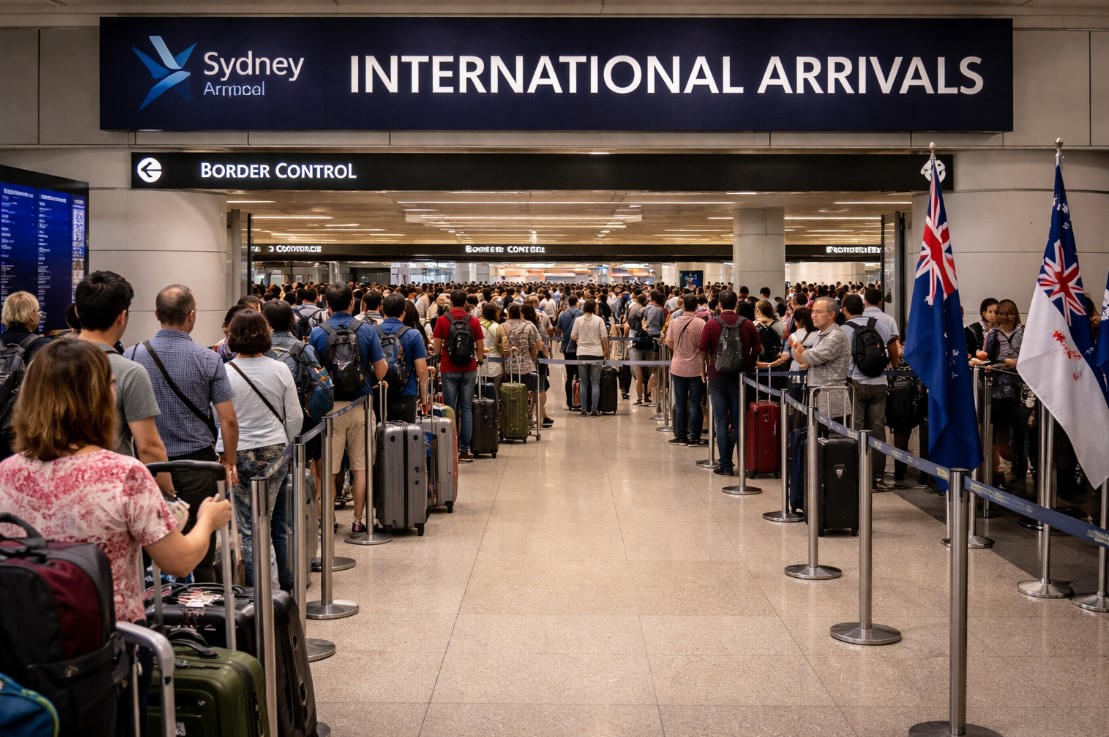
The Problem: Outdated Systems and Long Queues
Despite billions of dollars being spent on airport upgrades, industry leaders say the biggest delays are happening at immigration and customs.
Australia still relies heavily on paper-based processes, including the Incoming Passenger Card, which many countries have already replaced with digital systems.
This has led to:
- Long queues at the arrival halls
- Slower processing times
- Frustrating first impressions for international visitors
According to research, 31% of Australians said a poor border experience negatively affected their overall perception of a country—highlighting the reputational risk.
Airport leaders have warned that without urgent upgrades, Australia risks appearing inefficient compared to global hubs like Singapore or Dubai.
Rising Passenger Numbers Increasing Pressure
The urgency of the situation is amplified by rapidly growing travel demand. Authorities expect international arrivals to increase by up to 40% in the next three years, putting additional strain on already stretched systems.
At the same time, Australia’s busiest airports are expanding capacity to handle more passengers. However, without improvements to border processing, this added capacity could simply result in longer queues rather than smoother travel.
Melbourne Airport’s aviation chief warned that without reform, new infrastructure could become “holding areas” rather than efficient transit points.
The Solution: A Digital, Streamlined Border
Industry leaders are advocating for a fully modernised, digital border system that replaces manual processes with faster, automated solutions.
Key proposals include:
- Expanding digital passenger declarations
- Increasing the use of SmartGate technology
- Eliminating paper arrival cards
- Investing in faster biometric processing
Trials of digital arrival systems in Sydney and Brisbane have already shown promising results, but industry leaders say rollout needs to be accelerated nationwide.
A modern border system would not only reduce wait times but also improve security, efficiency, and passenger satisfaction.
Economic Benefits for Tourism and Hospitality
Beyond convenience, the push for border upgrades is driven by significant economic potential.
According to tourism research:
- Faster processing would allow travellers to spend more time exploring destinations
- Many visitors would check into accommodation sooner, shop, or dine locally
This means every hour saved at the border translates into real economic activity for:
- Hotels and serviced apartments
- Restaurants and retail
- Tourism operators
Industry leaders emphasise that improving the arrival experience is one of the quickest ways to boost Australia’s visitor economy.
Preparing for the 2032 Brisbane Olympics
The urgency is further heightened by the upcoming 2032 Brisbane Olympic and Paralympic Games, which are expected to bring a surge of international visitors.
Leaders say Australia must have a world-class border system in place before the Games to ensure the country can handle increased demand and present a positive global image.
Failing to act could result in:
- Congestion at major airports
- Negative visitor experiences
- Lost tourism opportunities
Impact on Accommodation and Travel Experience
The border experience plays a critical role in shaping the entire travel journey—from arrival to accommodation.
For cities like Melbourne, smoother border processing means:
- Faster hotel check-ins
- Increased occupancy rates
- Improved guest satisfaction
Accommodation providers, including serviced apartment operators like Corporate Keys, stand to benefit directly from improved arrival efficiency. Travellers arriving quickly and stress-free are more likely to begin their stay on a positive note and engage with the local economy sooner.
For business travellers, in particular, time saved at the border can significantly improve productivity and overall travel experience.
A Critical Moment for Australia’s Competitiveness
Airport and tourism leaders have stressed that border modernisation is not just about convenience—it is about maintaining Australia’s position in a competitive global travel market.
Countries with faster, more seamless entry processes are more attractive to travellers, airlines, and investors. Without upgrades, Australia risks losing its edge as a preferred destination.
As one industry leader noted, modernising the border is essential to ensuring Australia remains a “must-visit” destination in an increasingly competitive landscape.
Looking Ahead
The united call from Australia’s busiest airports highlights a critical moment for the country’s travel industry. With passenger numbers rising, infrastructure expanding, and major global events on the horizon, the need for efficient border systems has never been greater.
For travellers, the outcome will shape their first and last impression of Australia. For the tourism and accommodation sector, it could determine future growth and competitiveness.
Ultimately, the message from the industry is clear: modernising Australia’s borders is no longer optional—it’s essential for the future of travel.